Workflow design
Batch LLM Processing: A Test-First Workflow
Learn how batch LLM processing works and why sampling, structured outputs, cost review, and selective retries should happen before a full run.
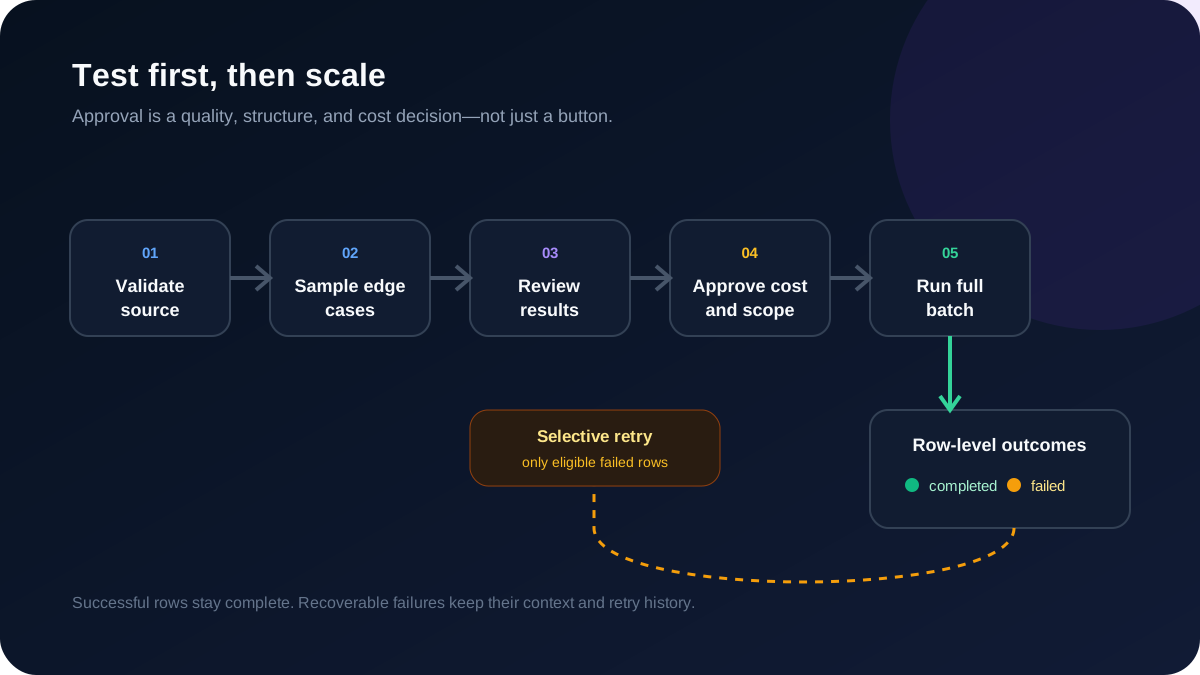
Batch LLM processing applies the same instruction pattern to many records. Common jobs include categorization, extraction, summarization, normalization, and content transformation. The basic loop is easy to describe, but dependable production work needs more than a loop over API calls.
The key operating principle is test first, then scale. A full run should be an approval decision based on representative output, expected cost, and a known recovery path.
What happens in a batch LLM job
Each step creates a boundary where a job can fail. Treating those boundaries explicitly is what separates a recoverable batch workflow from a script that simply stops or silently writes bad data.
- Parse the source file and validate required columns.
- Render one prompt from the template and current row values.
- Send the request to the selected model and capture usage metadata.
- Validate the response against the expected output fields and types.
- Store the result or a classified failure against the source row.
- Export completed results while preserving source identifiers.
Why the first test should be representative
A sequential sample can hide the exact conditions that break a workflow. Data is often ordered by date, customer, category, or source system. A representative sample should deliberately include different segments and edge cases, then show the original row, rendered prompt, and generated output side by side.
Testing is also the right time to compare models or revise instructions. Changing the prompt after a full run makes the dataset internally inconsistent unless every row is processed again under a clearly versioned configuration.
Structured output is a contract, not a styling choice
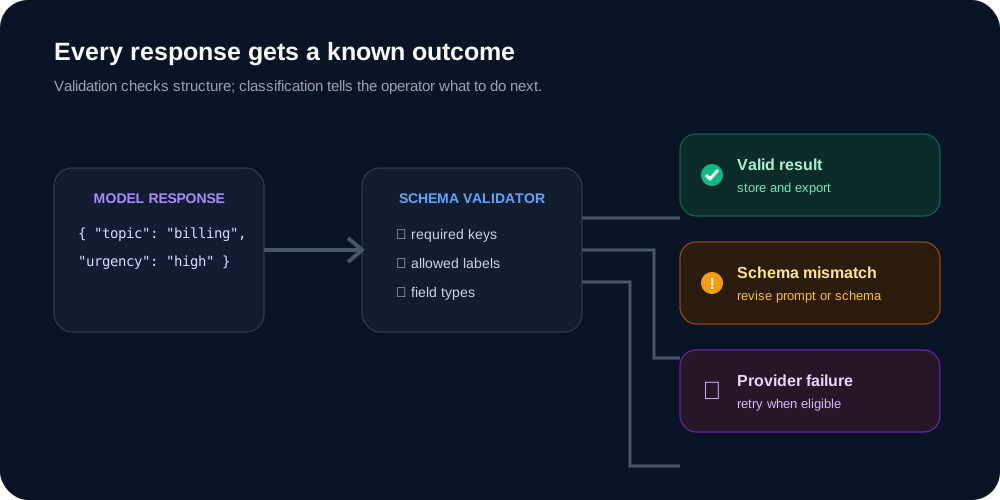
Downstream systems need predictable fields. Define the expected keys, types, allowed labels, and null behavior before processing. Validate every response and keep invalid structure separate from provider errors, rate limits, or input problems.
This error taxonomy tells an operator what to do next. An invalid row may need corrected source data, a rate limit may be retried later, and a schema mismatch may require a prompt change. Blindly retrying every failure wastes time and can repeat the same cost without fixing the cause.
Estimate cost before approving the full batch
Model cost depends on input tokens, output tokens, model pricing, and the number of rows. A test sample provides an observed range that is more useful than a guess based only on file size. Review the estimate alongside output quality because the cheapest model is not economical if its results require extensive cleanup.
Some providers also offer asynchronous batch pricing with slower turnaround. That can suit large, non-urgent workloads. Immediate processing is more appropriate when results must appear as the job runs or when a team is still iterating on the workflow.
Design for partial success and selective retry
A thousand-row job should not become useless because ten records fail. Persist successful results, expose partial exports when appropriate, and attach a clear status to each failed row. Selective retry should create an auditable new attempt without duplicating rows that already succeeded.
Finally, retain the prompt, output schema, model choice, and processing settings used for the run. Those versioned inputs make repeated workflows explainable and make comparisons between runs meaningful.
Frequently asked questions
What is batch LLM processing?
It is the application of a repeatable prompt and output contract to many source records, with each record tracked as part of one job.
Is batch processing cheaper than real-time LLM requests?
Some model providers offer discounted asynchronous batch APIs, but pricing and turnaround vary. Total cost still depends on the model, tokens, row count, retries, and output quality.
What should a batch LLM system track?
At minimum: source row identity, prompt and schema version, model configuration, status, usage, cost, output, failure category, and retry history.